f to c chart pdf

F to C Chart PDF: An Overview

F to C chart PDFs offer a quick reference for temperature conversions, vital in diverse fields․ These documents simplify switching between Fahrenheit and Celsius scales, aiding in practical applications․

Understanding Temperature Scales

Temperature scales are standardized ways to measure hotness or coldness․ Fahrenheit (°F) and Celsius (°C) are the most commonly used scales globally, though Kelvin (K) is prevalent in scientific contexts․ Fahrenheit, developed by Daniel Gabriel Fahrenheit, sets the freezing point of water at 32°F and the boiling point at 212°F․ Celsius, part of the metric system, defines 0°C as the freezing point and 100°C as the boiling point of water․

Understanding the differences is crucial when working with data from various sources․ An F to C chart PDF facilitates this understanding by providing a direct visual conversion․ The relationship isn’t linear; a degree Fahrenheit represents a smaller temperature difference than a degree Celsius․ Accurate conversion is essential in fields like cooking, weather, and scientific research․

What is an F to C Chart?

An F to C chart is a table or visual guide designed to quickly convert temperatures between the Fahrenheit and Celsius scales․ These charts typically list a range of Fahrenheit temperatures alongside their corresponding Celsius equivalents․ They can be presented in various formats, including simple tables, graphs, or even more complex diagrams․

An F to C chart PDF is simply a digital version of this chart, saved in the Portable Document Format․ This format ensures the chart appears consistently across different devices and operating systems․ PDFs are easily shareable and printable, making them a convenient tool for anyone needing frequent temperature conversions․ They eliminate the need for manual calculations or online converters․

Why Use a PDF Format?

Choosing a PDF format for an F to C chart offers several key advantages․ PDFs ensure universal compatibility, displaying consistently on any device – computers, tablets, or smartphones – regardless of the operating system․ This eliminates formatting issues common with other file types․

Furthermore, PDFs are easily shareable via email or online platforms, making distribution simple․ They also preserve the chart’s original layout and design, preventing accidental alterations․ A PDF F to C chart is readily printable, providing a physical copy for offline use․ The compact file size of PDFs makes them efficient to store and transmit, and they often require minimal bandwidth․

Creating Your Own F to C Chart

Building a custom F to C chart empowers personalized temperature conversions․ Utilizing the conversion formula and a table structure provides tailored utility․

Basic Formula: Converting Fahrenheit to Celsius

The cornerstone of any F to C conversion is the fundamental formula: °C = (°F ⎼ 32) × 5/9․ This equation allows for precise temperature adjustments between the two scales․ Understanding this formula is crucial when constructing your own chart, ensuring accuracy in every conversion․ It’s a simple yet powerful tool for anyone needing to translate temperatures regularly․

Essentially, you subtract 32 from the Fahrenheit temperature, then multiply the result by 5․ Finally, divide that product by 9 to obtain the equivalent Celsius temperature․ This process is consistently applied when populating an F to C chart, whether created manually or using digital tools․ Mastering this formula unlocks the ability to quickly and reliably convert temperatures as needed․

Building a Table for Common Temperatures

Creating a practical F to C chart involves listing frequently encountered temperatures․ Begin with increments of 10°F (or 5°C) for broader coverage, then refine with smaller steps around key values like freezing and boiling points․ A well-structured table enhances readability and quick lookups․

Consider including temperatures relevant to daily life – typical room temperature, common cooking temperatures, and average weather conditions․ Organize the table with Fahrenheit in one column and the corresponding Celsius values in another․ This clear presentation facilitates easy conversion․ Utilizing spreadsheet software can streamline the process, automating calculations and formatting for a professional-looking chart․ Remember to double-check calculations for accuracy!

Utilizing Online Conversion Tools

While F to C chart PDFs are useful, numerous online conversion tools offer instant, precise results․ These tools eliminate manual calculations and potential errors, providing convenience and speed․ Many websites and apps feature dedicated Fahrenheit to Celsius converters, often with additional functionalities like bulk conversion or temperature range input․

These digital tools are particularly helpful when needing conversions outside the scope of a standard chart․ They can handle decimal values and provide highly accurate results․ However, it’s crucial to use reputable converters to ensure reliability․ Cross-referencing results with a known conversion (like water’s freezing point) can verify accuracy․ Online tools complement PDF charts, offering flexibility and precision․

Key Temperatures and Their Conversions

F to C chart PDFs frequently highlight crucial temperatures like water’s freezing and boiling points, and normal human body temperature for quick reference․

Freezing Point of Water

F to C chart PDFs consistently showcase the freezing point of water as a fundamental conversion benchmark․ This temperature, 32°F, is universally recognized and serves as a crucial point of reference for many applications; Converting this to Celsius yields 0°C, a value equally important in scientific and everyday contexts․

The accuracy of an F to C chart PDF can be quickly verified by confirming this conversion․ Charts designed for practical use will prominently display both values, ensuring users can easily correlate the two scales․ Understanding this conversion is essential in fields like meteorology, cooking, and various scientific experiments where precise temperature control is paramount․ A reliable PDF will clearly indicate this key temperature for immediate access․

Furthermore, the freezing point of water is often used as a calibration point for thermometers and other temperature-measuring devices, reinforcing its significance within temperature conversion charts․

Boiling Point of Water

A comprehensive F to C chart PDF invariably includes the boiling point of water as a critical conversion point․ At standard atmospheric pressure, water boils at 212°F․ This value, when converted to Celsius, equates to 100°C – a cornerstone of temperature measurement and scientific calculations․ The presence of both values confirms the chart’s accuracy and usability․

F to C chart PDFs designed for practical application often highlight this conversion, aiding users in quickly understanding temperature differences․ This is particularly useful in cooking, where recipes may utilize either Fahrenheit or Celsius․ Accurate charts will clearly display both scales, eliminating confusion and ensuring precise results․

The boiling point of water also serves as a reference point for calibrating equipment and understanding phase transitions, solidifying its importance within temperature conversion resources․

Normal Human Body Temperature

A reliable F to C chart PDF will prominently feature the conversion for normal human body temperature․ Generally accepted as 98․6°F, this value is crucial for medical assessments and understanding physiological responses․ Converting this to Celsius yields approximately 37°C, a vital benchmark for health professionals and individuals alike․

F to C chart PDFs intended for healthcare or personal use prioritize this conversion due to its significance in identifying fevers or hypothermia․ Accurate charts will present both Fahrenheit and Celsius readings, facilitating quick and informed decisions regarding health status․

Understanding this conversion is essential for interpreting medical literature and communicating effectively with healthcare providers globally, where Celsius is the standard․

Finding and Downloading F to C Chart PDFs

F to C chart PDFs are readily available online through educational websites, conversion tools, and document repositories, offering convenient access for users․

Reliable Sources for PDF Charts

Locating trustworthy F to C chart PDFs requires careful consideration of the source․ Reputable educational institutions and scientific organizations frequently provide accurate and well-formatted charts․ Government websites, particularly those related to meteorology or standards, are also excellent resources․

Conversion factor websites often host downloadable PDFs as supplementary materials․ However, always verify the chart’s accuracy against known conversion points, like the freezing and boiling points of water․ Avoid downloading from unfamiliar or unverified websites, as these may contain errors or even malicious software․ Look for charts that clearly state their source and any revision dates․ Prioritize sources with a strong reputation for providing reliable scientific or technical information․ Cross-referencing with multiple sources is a good practice to ensure accuracy․

Checking PDF Chart Accuracy

Verifying the accuracy of an F to C chart PDF is crucial before relying on its conversions․ Begin by testing known values: 32°F should convert to 0°C, and 212°F to 100°C․ Check several other common temperatures – normal body temperature (98․6°F) and a typical room temperature (72°F) are good starting points․

Examine the chart for consistency; conversions should follow the established formula; Look for any obvious errors in the table’s values or formatting․ If the PDF includes a source, investigate that source’s credibility․ Be wary of charts lacking clear origins or displaying unusual formatting․ A reliable chart will provide precise and consistent conversions, ensuring accurate temperature interpretations for various applications․ Double-checking is always recommended, especially in critical scenarios․

Printing and Using PDF Charts

Printing an F to C chart PDF is straightforward; ensure your printer settings are correct for accurate scaling and legibility․ Choose a paper size that accommodates the chart without distortion․ Once printed, consider laminating the chart for durability, especially in environments prone to spills or frequent handling․

For practical use, keep the chart readily accessible in relevant locations – kitchens, laboratories, or weather stations․ When converting temperatures, locate the Fahrenheit value on the chart and directly read the corresponding Celsius equivalent․ Digital PDFs offer search functionality for quick lookups․ Remember to periodically review and replace older charts to ensure continued accuracy and clarity․ A well-maintained chart is a valuable tool for seamless temperature conversions․

Applications of F to C Conversion

F to C conversions are essential across cooking, weather, and scientific fields․ Charts simplify these tasks, ensuring accurate temperature readings for diverse applications and experiments․

Cooking and Baking

F to C chart PDFs are incredibly useful in the kitchen, as many recipes originate from countries using different temperature scales․ A quick conversion ensures accurate oven temperatures for baking success․ For example, a recipe calling for 350°F needs to be converted to approximately 177°C for proper results․

Using a readily available PDF chart eliminates calculation errors, preventing undercooked or overcooked dishes․ This is particularly important in baking, where precise temperatures are crucial for chemical reactions like rising and setting․ Whether adjusting a family heirloom recipe or following an international cookbook, a conversion chart provides confidence and consistency․ Furthermore, understanding the conversion allows for better judgment when recipes only provide approximate cooking times․

Weather Forecasting

F to C chart PDFs become essential when interpreting weather reports from different sources․ Global weather data often utilizes Celsius, while some regions, like the United States, primarily use Fahrenheit․ A quick reference chart facilitates understanding temperature readings regardless of the reporting scale․

For instance, a forecast of 85°F translates to roughly 29°C, helping individuals prepare appropriately for the day’s conditions․ Having a PDF chart readily accessible allows for immediate comprehension, especially when monitoring severe weather alerts․ It’s useful for travelers checking forecasts in unfamiliar locations, ensuring they pack suitable clothing․ Accurate temperature interpretation is vital for safety and comfort, and a conversion chart simplifies this process significantly․

Scientific Experiments

F to C chart PDFs are crucial in scientific settings where precise temperature control and recording are paramount․ Many experiments require temperatures to be reported in Celsius, the standard unit within the scientific community, even if initial measurements are taken in Fahrenheit․

A readily available PDF chart ensures accurate conversions, minimizing errors that could compromise experimental results․ This is particularly important in fields like chemistry and biology, where temperature significantly impacts reaction rates and biological processes․ Researchers can quickly verify conversions during data analysis and reporting․ Maintaining consistency in units is vital for reproducibility and collaboration, and a conversion chart aids in achieving this․ Accurate temperature documentation is fundamental to the scientific method․

Advanced Considerations

F to C chart PDFs may not account for nuanced temperature differences or intervals; precise calculations require the conversion formula for accuracy․

Temperature Differences and Intervals

When working with F to C chart PDFs, understanding temperature differences is crucial․ A one-degree Fahrenheit change isn’t equivalent to a one-degree Celsius change․ Charts typically display discrete values, potentially obscuring the precise interval size․ For example, the interval between each degree Celsius is larger than that of Fahrenheit․

To calculate temperature intervals accurately, utilize the conversion formula rather than relying solely on the chart’s visual representation․ This is especially important in scientific contexts where precision is paramount․ Charts are excellent for quick lookups, but for detailed analysis involving temperature ranges or changes, mathematical conversion provides a more reliable result․ Remember that a change of 1°C is equal to a change of 1․8°F․

Dealing with Negative Temperatures

F to C chart PDFs often include negative temperatures, essential for weather reports and scientific applications․ When converting from Fahrenheit to Celsius with negative values, careful attention to the formula is needed to avoid errors․ The standard conversion formula (C = (F ─ 32) × 5/9) remains valid, but the subtraction step is critical․

Some charts may visually represent negative Celsius temperatures differently, potentially causing confusion․ Always double-check the scale and ensure accurate interpretation․ When using a chart, verify that it extends to the required negative temperature range․ For precise conversions involving negative values, employing an online converter alongside the PDF chart is recommended for confirmation and accuracy․


Posted in PDF

guide coat spray

Guide coat spray is a crucial tool for automotive bodywork, enabling detailed surface inspection and defect identification during repair processes.

Its primary purpose is to highlight imperfections like scratches, pinholes, and unevenness, ensuring a flawless final finish after painting or bodywork.

Historically, guide coats evolved from simple chalk-based mixtures to sophisticated aerosol formulations, improving visibility and application efficiency.

What is Guide Coat Spray?

Guide coat spray is a temporary coating applied to a vehicle’s surface, primarily during the body repair and refinishing stages. It isn’t a paint itself, but rather a contrasting color designed to reveal imperfections that are otherwise difficult to see with the naked eye. Think of it as a visual amplifier for surface flaws.

Typically, it’s a very thin, easily sandable layer. The contrast between the guide coat and the existing paintwork—whether original or previously applied—highlights areas needing attention. This includes minor scratches, swirl marks from sanding, pinholes in body filler, and inconsistencies in the body’s surface contours. It’s a critical step before applying primer or basecoat.

Modern formulations often come in aerosol cans for convenient application, though traditional spray gun methods are also used. The key is achieving a uniform, light coating that doesn’t obscure the underlying surface but clearly defines its imperfections.

Purpose of Using Guide Coat

The core purpose of using guide coat is to dramatically improve the accuracy and quality of automotive body repairs. It allows technicians to visually identify even the smallest imperfections that would otherwise be missed, leading to a smoother, more professional finish.

Specifically, guide coat reveals inconsistencies in surface preparation. It highlights areas where sanding isn’t level, where body filler needs further work, or where minor scratches remain hidden. This prevents these flaws from being concealed under subsequent layers of paint, which would ultimately compromise the final result.

By providing a clear visual reference, guide coat minimizes rework, saves time, and reduces material waste. It ensures that the surface is perfectly smooth and uniform before applying primer and paint, guaranteeing a high-quality, long-lasting repair.

Historical Context & Development

The concept of a guide coat dates back to the early days of automotive painting, initially utilizing rudimentary methods like applying a thin layer of contrasting chalk dust or powder. These early iterations served the same fundamental purpose – to reveal surface imperfections – but lacked the consistency and ease of modern formulations.

Over time, the development shifted towards liquid-based guide coats, often mixtures of paint and a contrasting color. The introduction of spray technology in the mid-20th century significantly improved application, offering a more even and controllable coating.

The most significant advancement came with the advent of aerosol technology and specialized formulations. Modern guide coats are engineered for optimal visibility, adhesion, and ease of removal, representing a substantial leap from their humble beginnings. Today’s options cater to diverse needs, offering varying colors and compositions for different applications.

Types of Guide Coat Sprays

Guide coat sprays broadly fall into water-based and solvent-based categories, each offering unique properties for different applications and user preferences.

Aerosol cans and traditional spray guns provide distinct application methods, impacting finish control and portability during bodywork.

Water-Based Guide Coats

Water-based guide coats represent a modern evolution in surface inspection technology, prioritizing user safety and environmental responsibility. These formulations utilize water as the primary solvent, significantly reducing the emission of volatile organic compounds (VOCs) compared to their solvent-based counterparts.

This makes them an increasingly popular choice in body shops striving for eco-friendly practices and improved worker health. Water-based guide coats generally offer excellent visibility on various surface colors, effectively highlighting imperfections like pinholes, scratches, and sanding marks. They are particularly well-suited for use with modern basecoat/clearcoat paint systems.

However, water-based options may require more coats for optimal contrast, and can be more susceptible to wash-off if exposed to water before the topcoat is applied. Proper drying time and application technique are crucial for achieving the best results. Despite these considerations, their lower toxicity and ease of cleanup make them a favored choice for many professionals.

Solvent-Based Guide Coats

Solvent-based guide coats have historically been the standard in automotive bodywork due to their exceptional contrast and durability. Utilizing strong solvents, these formulations create a highly visible layer that readily reveals surface imperfections such as scratches, pinholes, and unevenness in body filler or existing paint.

They offer superior adhesion and resistance to being washed off during sanding or preparation processes, making them reliable for complex repairs. However, the use of strong solvents presents significant drawbacks, including high VOC emissions and potential health risks for applicators.

Proper ventilation and respiratory protection are absolutely essential when working with solvent-based guide coats. While offering excellent performance, their environmental impact and safety concerns are driving a shift towards water-based alternatives, despite the continued preference of some professionals for their distinct advantages in certain applications.

Aerosol vs. Traditional Spray Gun Application

Aerosol guide coat sprays offer convenience and ease of use, requiring minimal setup and cleanup, making them ideal for smaller repairs or DIY enthusiasts. They deliver a consistent spray pattern with built-in mixing, ensuring uniform coverage. However, aerosol cans can be less economical for large-scale projects and offer limited control over spray fan and material flow.

Traditional spray gun application, utilizing HVLP (High Volume Low Pressure) or LVLP (Low Volume Low Pressure) systems, provides superior control and customization. Technicians can precisely adjust the spray pattern, fluid flow, and air pressure to achieve optimal coverage and minimize waste.

This method is preferred in professional body shops for larger repairs, offering greater efficiency and a higher-quality finish. While requiring more skill and equipment, spray guns ultimately provide a more versatile and cost-effective solution for experienced users.

Application Techniques

Effective guide coat application demands meticulous surface preparation, precise spray gun settings, and consistent distance/overlap for optimal defect highlighting and repair quality.

Surface Preparation is Key

Achieving a reliable guide coat reading hinges on impeccable surface preparation. Before application, the panel must be thoroughly cleaned, removing all traces of contaminants like wax, grease, silicone, and dust. These residues can repel the guide coat, creating false negatives and masking underlying imperfections.

Existing paintwork should be scuffed with fine-grit sandpaper – typically 320 to 400 grit – to provide a mechanical key for the guide coat and reveal any existing surface flaws.

This scuffing process doesn’t need to remove the existing paint entirely, but it must create a uniformly dull surface.

Following sanding, a wax and grease remover is essential to eliminate any residue created during the abrasion process. A clean, lint-free tack cloth should then be used for a final wipe-down, ensuring a pristine surface ready to receive the guide coat.

Proper preparation guarantees accurate defect identification.

Spray Gun Settings & Patterns

Optimal guide coat application demands precise spray gun settings. Fluid pressure typically ranges between 20-30 PSI, while atomization air pressure should be around 60-80 PSI, though these values can vary based on the spray gun model and guide coat viscosity.

A fan pattern of 10-12 inches is generally recommended, allowing for even coverage without excessive material buildup. The spray gun should be held perpendicular to the surface, maintaining a consistent distance of 6-8 inches.

Employ a smooth, overlapping motion, typically 50-75% overlap with each pass, to avoid streaks or inconsistencies.

Avoid concentrating the spray in one area, as this can create a thick, uneven coat that obscures defects. Multiple light coats are preferable to a single heavy coat.

Consistent settings yield reliable results.

Proper Spray Distance & Overlap

Maintaining the correct spray distance is paramount for effective guide coat application. A distance of 6-8 inches from the surface ensures adequate atomization and prevents the coat from becoming too thick or too thin. Closer distances risk runs and sags, while greater distances can lead to a dusty, uneven finish.

Overlap, the degree to which each spray pass covers the previous one, is equally crucial. A 50-75% overlap guarantees consistent coverage and avoids gaps or stripes. This technique blends each pass seamlessly, creating a uniform layer that accurately reveals surface imperfections.

Consistent speed and movement are vital during application. Slow, deliberate passes are preferred over quick, erratic motions.

Proper technique maximizes defect visibility.

Identifying Defects with Guide Coat

Guide coat spray vividly reveals surface flaws like pinholes, scratches, and uneven areas, allowing for precise repair before the final paint application.

It’s a vital step for quality!

Pinholes & Small Imperfections

Guide coat spray excels at exposing pinholes and minor imperfections that are often invisible to the naked eye, particularly within body filler or primer layers. When applied, the contrasting color settles into these tiny flaws, making them readily apparent. These imperfections, if left unaddressed, can lead to paint adhesion issues, corrosion, and an overall compromised finish.

Pinholes typically arise from trapped air bubbles during the application of body filler or primer, or from surface contamination. The guide coat doesn’t just reveal their presence; it also indicates their size and distribution, guiding the necessary repair work. Addressing these small defects early prevents larger, more costly problems down the line, ensuring a smooth, durable, and aesthetically pleasing final result. Careful sanding and re-application of filler or primer are usually required.

Scratches & Sanding Marks

Guide coat spray is exceptionally effective at revealing scratches and sanding marks left on the vehicle’s surface during preparation work. These imperfections, even if seemingly minor, disrupt the smoothness required for a high-quality paint job. The guide coat fills these subtle contours, creating a visible contrast that highlights their location and severity.

Sanding marks often indicate insufficient refinement of the surface, while scratches can stem from improper handling or abrasive materials. Identifying these flaws with the guide coat allows technicians to precisely target areas needing further attention. Corrective action typically involves further sanding with progressively finer grits, ensuring a perfectly level surface before paint application. Ignoring these imperfections results in a textured or uneven finish, diminishing the overall aesthetic appeal and durability.

Uneven Surfaces & Body Work

Guide coat spray excels at exposing subtle unevenness in body panels, particularly after collision repair or body filler application. Areas where bodywork has been performed often retain slight variations in contour, even if appearing smooth to the naked eye. The guide coat highlights these discrepancies by creating a contrasting layer that accentuates any high or low spots.

This is crucial because even minor imperfections can become dramatically visible after paint application, ruining the final finish. Technicians use the guide coat to pinpoint areas requiring further block sanding or filler application to achieve a perfectly uniform surface. Proper use ensures seamless blending of repaired sections with the original bodywork, resulting in a professional and aesthetically pleasing outcome. Addressing these issues early prevents costly rework and guarantees a durable, high-quality repair.

Guide Coat Colors & Visibility

Guide coat spray comes in various colors; gray, red, and others, each offering unique visibility advantages depending on the underlying paint color and lighting conditions.

Gray Guide Coat – Common Uses

Gray guide coat spray is arguably the most versatile and frequently utilized option in automotive body repair shops due to its broad compatibility with a wide spectrum of paint colors. It provides a neutral contrast against both light and dark surfaces, making it exceptionally effective for identifying subtle imperfections that might otherwise go unnoticed.

Specifically, gray excels at revealing minor scratches, sanding marks, pinholes, and inconsistencies in body filler application. Its subdued tone doesn’t obscure details, allowing technicians to accurately assess the surface preparation quality before applying primer or base coats. This is particularly useful when working with metallic or pearl finishes where visual inspection can be misleading.

Furthermore, gray guide coat is often preferred for initial inspections after bodywork, providing a comprehensive overview of the repaired area’s smoothness and uniformity. It’s a reliable choice for everyday use, offering a balanced combination of visibility and practicality.

Red Guide Coat – High Contrast Applications

Red guide coat spray is specifically chosen for applications demanding maximum contrast, particularly when inspecting darker-colored vehicles or surfaces. Its vibrant hue dramatically highlights even the smallest imperfections against black, navy blue, or deep gray paintwork, making it exceptionally effective at revealing flaws that a gray coat might miss;

This high visibility makes red ideal for identifying swirl marks left by polishing, subtle scratches, and imperfections in the clear coat. Technicians often utilize red guide coat during the final stages of paint preparation to ensure a flawless finish. It’s also beneficial when assessing repairs on textured surfaces where subtle variations can be difficult to detect.

However, due to its strong contrast, red may not be the best choice for lighter-colored vehicles as it can sometimes obscure minor defects. It’s a powerful tool when used strategically for high-contrast scenarios.

Other Colors & Their Specific Advantages

While gray and red are the most common, guide coat sprays are available in other colors, each offering unique benefits. Blue guide coat, for instance, provides excellent contrast on silver and lighter metallic finishes, revealing imperfections that gray might overlook. White guide coats excel on very dark surfaces, offering a stark contrast for detailed inspection.

Yellow guide coats are sometimes preferred for their visibility under certain lighting conditions and can be useful for identifying subtle contours. Black guide coat, though less frequently used, can highlight imperfections on lighter shades, particularly when assessing filler application.

The choice of color depends heavily on the base color of the vehicle and the type of defects being sought. Experimentation with different hues can optimize defect detection and ensure a superior quality repair.

Safety Precautions

Guide coat spray application demands proper ventilation, respiratory protection, and skin/eye safeguards due to solvent content and potential flammability risks.

Always store in a cool, well-ventilated area.

Ventilation & Respiratory Protection

Guide coat sprays, particularly solvent-based varieties, release volatile organic compounds (VOCs) that can be harmful if inhaled. Adequate ventilation is paramount during application; ideally, work within a spray booth equipped with a robust exhaust system to remove airborne particles and fumes.

If a spray booth isn’t available, ensure the work area is exceptionally well-ventilated with open doors and windows, alongside fans to circulate air. However, relying solely on natural ventilation may not be sufficient for prolonged or frequent use.

Respiratory protection is crucial, even with ventilation. A properly fitted respirator equipped with organic vapor cartridges is essential to filter out harmful VOCs. The type of respirator should be selected based on the specific spray’s composition and the level of exposure. Regularly inspect and replace cartridges according to the manufacturer’s instructions to maintain effectiveness. Prioritize your health and safety by consistently using appropriate respiratory gear.

Skin & Eye Protection

Guide coat sprays can cause skin irritation upon contact, ranging from mild dryness to more severe dermatitis. Direct skin exposure should be avoided at all costs. Wearing appropriate skin protection, such as nitrile gloves, is essential during application and cleanup. Cover exposed skin areas with long sleeves and pants to minimize potential contact.

Eye protection is equally critical. Guide coat spray can cause significant eye irritation or even damage if it comes into contact with the eyes. Always wear safety glasses or a full face shield to create a barrier against splashes or overspray.

In the event of accidental skin or eye contact, immediately flush the affected area with copious amounts of water for at least 15 minutes and seek medical attention if irritation persists. Prioritize preventative measures to safeguard your skin and eyes during the application process.

Flammability & Storage

Many guide coat sprays, particularly those solvent-based, are highly flammable. Keep these products away from open flames, sparks, heat sources, and static discharge. Ensure adequate ventilation during application to prevent the buildup of flammable vapors. Avoid smoking or using any ignition sources in the immediate work area.

Proper storage is crucial for maintaining product safety and quality. Store guide coat spray cans in a cool, dry, and well-ventilated area, away from direct sunlight and extreme temperatures. Keep containers tightly closed when not in use to prevent evaporation and contamination.

Always consult the Safety Data Sheet (SDS) for specific flammability information and storage recommendations for the particular guide coat spray product you are using. Follow all local regulations regarding the storage of flammable materials.

Guide Coat vs. Other Inspection Methods

Guide coat excels at revealing subtle surface flaws, offering a cost-effective alternative to lighting boards or dye penetrant testing for detailed bodywork assessment.

Guide Coat vs. Visual Inspection

Visual inspection, while a fundamental first step, often fails to detect subtle imperfections in automotive surfaces. The human eye can be easily deceived by reflections, paint variations, and minor undulations, leading to overlooked defects that compromise the final finish.

Guide coat spray, however, provides a contrasting layer that dramatically highlights these imperfections. By creating a uniform base, it makes even the smallest scratches, pinholes, sanding marks, and uneven areas readily visible. This enhanced visibility is crucial for achieving a high-quality repair.

Essentially, guide coat doesn’t replace visual inspection, but significantly augments it. It transforms subtle flaws into obvious indicators, ensuring thorough preparation and a superior outcome. Relying solely on the eye risks hidden defects resurfacing after paint application, necessitating rework and increased costs.

Guide Coat vs. Lighting Boards

Lighting boards, utilizing focused illumination, are valuable for revealing surface imperfections, but their effectiveness is heavily reliant on the angle of light and the observer’s position. Shadows and glare can easily mask subtle defects, requiring constant adjustments and skilled interpretation.

Guide coat spray offers a more consistent and reliable method for defect detection. It creates a uniform, contrasting surface, eliminating the variability introduced by lighting conditions. Unlike lighting boards, guide coat doesn’t require precise positioning or subjective assessment of shadows.

While lighting boards excel at highlighting larger contours, guide coat excels at revealing minute imperfections – pinholes, light scratches, and inconsistencies in body filler application. They are complementary tools; however, guide coat provides a more definitive and comprehensive assessment of surface quality, ensuring a flawless finish.

Guide Coat vs. Dye Penetrant Testing

Dye penetrant testing is a highly sensitive method primarily used for detecting cracks and porosity in metals, relying on capillary action to reveal subsurface flaws. It’s a destructive testing method, requiring thorough surface preparation and a multi-step process involving penetrant application, dwell time, and developer application.

Guide coat spray, conversely, focuses on surface imperfections in bodywork – scratches, sanding marks, and unevenness – and is non-destructive. It’s a visual inspection aid, quickly highlighting areas needing attention during paint preparation and body repair.

While dye penetrant testing identifies internal flaws, guide coat reveals surface anomalies. They serve different purposes; dye penetrant is for structural integrity assessment, while guide coat is for cosmetic finish quality. Guide coat is faster, simpler, and more suited for routine bodywork inspection, offering immediate feedback on surface preparation.

evidence for evolution worksheet answers pdf

Evidence for evolution is vast, spanning fossils, genetics, comparative anatomy, and molecular biology. Worksheets and guides provide comprehensive resources for understanding evolutionary concepts, ideal for educational purposes.

1.1 Overview of Evolutionary Biology

Evolutionary biology studies how species change over time through genetic variations and natural selection. It examines fossil records, comparative anatomy, and molecular biology to trace life’s diversity. Key evidence includes homologous structures, embryological similarities, and DNA sequences, all supporting descent with modification. These concepts form the foundation of understanding evolutionary processes and relationships among organisms, as outlined in educational resources like worksheets and guides.

1.2 Importance of Understanding Evolutionary Evidence

Understanding evolutionary evidence is crucial for grasping life’s diversity and adaptation. It provides insights into how species change over time, supporting education through resources like worksheets and guides. These tools help students and educators explore complex concepts, fostering a deeper appreciation for biology and its relevance to understanding life on Earth.

Fossil Record as Evidence for Evolution

The fossil record reveals the history of life, with transitional fossils showing gradual changes. Patterns in fossils support descent with modification and adaptive radiation over time.

2.1 Types of Fossil Evidence

Fossil evidence for evolution includes transitional fossils, trace fossils, and fossilized bones. Transitional fossils exhibit intermediate traits between species, while trace fossils reveal ancient behaviors. Fossilized bones provide anatomical data, supporting evolutionary relationships. These fossils, studied in worksheets and guides, offer insights into life’s history, aiding students in understanding evolutionary processes and biological changes over time.

2.2 Key Fossil Case Studies

Fossil records provide critical evidence for evolution, showcasing transitional forms and evolutionary relationships. Key case studies include fossils of whales, demonstrating their land-to-sea transition, and tetrapods, revealing the evolution of limbs. These fossils highlight gradual changes over time, supporting the theory of descent with modification. Educational resources, such as worksheets, often feature these examples to illustrate evolutionary processes clearly.

Comparative Anatomy and Embryology

Comparative anatomy and embryology reveal evolutionary relationships through shared structures and developmental stages. Embryos of different species often exhibit similar features, indicating common ancestry. Homologous structures, like limb bones in mammals, further support this concept.

3.1 Homologous Structures Across Species

Homologous structures are anatomical features shared by different species, indicating a common ancestor. For example, forelimbs in vertebrates show similar bone structures despite varying functions. These similarities highlight evolutionary relationships, as seen in comparative anatomy studies. Worksheets often use such examples to illustrate descent with modification, aiding students in understanding how shared traits evolve over time.

3.2 Embryological Similarities

Embryological similarities across species provide strong evidence for evolution. Early embryos of different organisms often exhibit shared traits, such as gill slits or tail structures, which disappear later in development. These similarities suggest a common ancestry, as they reflect inherited genetic material. For example, human and fish embryos show strikingly similar features, highlighting evolutionary relationships. Such patterns underscore descent with modification, a key principle of evolutionary biology.

Molecular Biology and Genetics

Molecular biology provides strong evidence for evolution through DNA sequencing and protein comparisons, revealing genetic relationships and common ancestry among organisms.

4.1 DNA and Protein Sequence Comparisons

DNA and protein sequences provide strong evidence for evolution by revealing genetic similarities across species. Comparing sequences like Cytochrome C shows shared ancestry, as organisms with closer evolutionary relationships have fewer differences. These comparisons help construct evolutionary trees, illustrating how species diverged over time. Such analyses confirm that genetic material is inherited and modified, supporting the theory of common descent.

4.2 Genetic Evidence for Common Descent

Genetic evidence for common descent includes DNA and protein sequence comparisons, showing similarities across species. These genetic traits, inherited from ancestors, indicate shared evolutionary origins. For example, cytochrome C differences among organisms reveal relatedness to humans. Such molecular data supports evolutionary relationships, confirming descent with modification. Worksheets and guides detail these genetic patterns, aiding in understanding how traits are passed through generations.

Biogeography and Geographic Distribution

Species distribution patterns and island biogeography reveal evolutionary relationships, showing how geographic isolation leads to speciation and adaptive radiation, supported by fossil and genetic evidence.

5.1 Patterns of Species Distribution

Species distribution patterns provide strong evidence for evolution, as they often align with phylogenetic relationships. Geographic isolation can lead to speciation, creating distinct species in different regions. For example, island biogeography shows how species adapt and diverge in isolated environments. These patterns support the idea of descent with modification, where related species share common ancestry but exhibit traits suited to their specific habitats.

5.2 Island Biogeography and Speciation

Island biogeography explains how geographic isolation leads to speciation. Species in isolated areas evolve uniquely due to limited gene flow. Adaptive radiation occurs when species diversify into vacant niches. Educational resources, like worksheets, provide evidence of speciation events, such as the Galápagos finches, illustrating how isolation drives evolutionary changes and supports Darwin’s theories on biodiversity and adaptation.

Observations of Evolutionary Processes

Natural selection and adaptive radiation are key processes observed in evolution. Worksheets and guides detail these mechanisms, providing insights into how species adapt and diversify over time.

6.1 Natural Selection in Action

Natural selection drives evolutionary change by favoring traits that enhance survival and reproduction. Educational resources, like worksheets, highlight examples such as antibiotic resistance in bacteria and peppered moth coloration. These cases demonstrate how environmental pressures lead to adaptation, supporting Darwin’s theory of descent with modification. Such observations align with evidence from fossils, genetics, and comparative anatomy, reinforcing evolution’s validity.

6.2 Adaptive Radiation

Adaptive radiation explains how species diverge into diverse forms due to environmental pressures. It provides clear evidence of evolution by showing how organisms adapt to ecological niches. This process highlights evolutionary changes over time, demonstrating how species develop unique traits to survive and thrive in different environments, aligning with evolutionary biology principles.

Phylogenetic Trees and Evolutionary Relationships

Phylogenetic trees illustrate evolutionary relationships through branching diagrams, showing shared ancestry and divergence. Educational resources, like worksheets, help visualize these connections, aiding in understanding evolutionary biology concepts.

7.1 Constructing Phylogenetic Trees

Phylogenetic trees are constructed using DNA and protein sequences to visualize evolutionary relationships. Genetic data is analyzed to identify shared ancestry, with computational methods determining branch placements. These trees reveal patterns of divergence, aiding in understanding how species are connected over time. They are essential tools in evolutionary biology for mapping lineage and studying adaptation.

7.2 Interpreting Evolutionary Relationships

Evolutionary relationships are interpreted through phylogenetic trees, which map how species diverge over time. By comparing anatomical structures, genetic data, and molecular sequences, scientists determine relatedness. Proteins like Cytochrome C reveal evolutionary connections, showing how traits are inherited. These methods help trace common ancestry, providing insights into how species adapt and diverge, essential for understanding evolutionary history and educational resources on the topic.

Vestigial Structures and Organs

Vestigial structures, like the human appendix, show evolutionary remnants. Worksheets and guides highlight these organs as evidence of common ancestry, aiding educational understanding of evolutionary biology.

8.1 Examples of Vestigial Structures

Vestigial structures, like the human appendix and wisdom teeth, are remnants of organs that were once functional in ancestors. These structures have lost their original purpose through evolution. For example, male nipples and the vestigial tailbone (coccyx) are traces of evolutionary history. Such features provide evidence of common descent and are often highlighted in educational resources, such as worksheets, to illustrate evolutionary principles.

8.2 Implications for Evolutionary Theory

Vestigial structures, like the human appendix, provide strong evidence for evolutionary theory. These non-functional traits suggest descent from common ancestors, supporting Darwin’s ideas. They demonstrate how species evolve over time, adapting to environmental changes. Such structures highlight the shared evolutionary history across organisms, reinforcing the concept of natural selection and descent with modification. Educational resources, such as worksheets, help students explore these implications deeply.

Evidence from Comparative Physiology

Comparative physiology highlights similarities in functional traits across species, supporting evolutionary relationships. Convergent evolution explains identical traits in unrelated species, reinforcing common ancestry theories.

9.1 Physiological Similarities Across Species

Physiological similarities across species highlight shared evolutionary origins. For instance, the structure of proteins like Cytochrome C in humans and other organisms shows relatedness. These similarities in metabolic pathways and organ functions across different species provide evidence of common ancestry. Educational resources, such as worksheets and guides, often use these examples to illustrate evolutionary connections, making complex concepts accessible for students.

9.2 Convergent Evolution in Physiology

Convergent evolution in physiology illustrates how different species develop similar traits independently. For example, desert plants and cacti both evolved thick, waxy stems to retain water, despite being unrelated. Similarly, fast-swimming fish like sharks and dolphins have similar muscle structures. These similarities arise from shared environmental pressures, providing strong evidence for evolutionary adaptation and natural selection.

The Role of DNA in Evolutionary Studies

10.1 DNA Sequencing and Evolution

DNA sequencing reveals genetic similarities, supporting common descent. Mitochondrial DNA traces evolutionary history, aiding in constructing phylogenetic trees and understanding species relationships.

DNA sequencing provides direct evidence of evolutionary relationships by comparing genetic material across species. By analyzing differences in DNA sequences, scientists can infer how closely related organisms are. This method supports the concept of common descent, as shared genetic traits indicate evolutionary connections. Educational resources, like worksheets, often use DNA comparisons to teach how genetic data validates evolutionary theory.

10.2 Mitochondrial DNA and Evolutionary History

Mitochondrial DNA is a powerful tool for tracing evolutionary history, as it is maternally inherited without recombination. Mutations in mitochondrial DNA accumulate over generations, serving as a molecular clock to estimate divergence times. This DNA, found in mitochondria, provides insights into ancient lineage and species relationships, supporting theories of common ancestry and evolutionary change over millions of years.

Evolutionary Developmental Biology (Evo-Devo)

11.1 Role of Developmental Genes

Developmental genes regulate morphological changes, providing insights into evolutionary processes. These genes influence traits across species, offering evidence of shared ancestry and evolutionary adaptation over time.

Developmental genes regulate the formation and patterning of body structures during embryogenesis. These genes, such as Hox genes, determine segment identity and limb development. Mutations in developmental genes can lead to significant morphological changes, providing evidence for evolutionary relationships. For example, similarities in developmental gene sequences across species suggest common ancestry. These genes also explain how complex body plans evolve over time.

11.2 Morphological Changes Over Time

Morphological changes over time reveal evolutionary patterns. Fossil records show gradual shifts in body structures, while embryology highlights developmental similarities. Worksheets and guides, like the evidence for evolution PDF, provide detailed exercises to analyze these changes, helping students understand how species adapt and diverge over generations through practical examples and visual comparisons.

Behavioral and Cognitive Evolution

Behavioral traits and cognitive abilities evolve over time, shaped by natural selection. Educational resources, like worksheets, explore these changes, offering insights into evolutionary adaptations and species intelligence.

12.1 Evolution of Behavior

Behavioral evolution examines how traits like foraging, migration, and social interactions develop over time. Genetic factors influence these behaviors, with instincts often being inherited. Studies show similarities in behaviors across species, supporting evolutionary theory. Educational resources, such as worksheets, provide exercises to analyze these patterns, helping students understand how behaviors adapt to environmental pressures and contribute to species survival and diversification.

12.2 Cognitive Abilities in Different Species

Cognitive abilities vary across species, reflecting evolutionary adaptations to environmental demands. Advanced problem-solving in humans and tool use in primates demonstrate cognitive evolution. Such variations highlight how mental traits develop to enhance survival, aligning with evolutionary principles. Educational resources, like worksheets, explore these cognitive differences, offering insights into evolutionary relationships and adaptive strategies.

The Process of Speciation

Speciation involves mechanisms like geographic isolation or genetic drift, leading to new species. Worksheets highlight examples of recent speciation, aiding in understanding evolutionary divergence processes clearly.

13.1 Mechanisms of Speciation

Speciation occurs through mechanisms like geographical isolation, genetic drift, and natural selection. These processes lead to reproductive isolation, preventing interbreeding. Evidence from worksheets highlights how genetic divergence and adaptive radiation drive speciation. Educational resources, such as PDF guides, detail these mechanisms, showing how species emerge over time due to evolutionary pressures and genetic changes.

13.2 Examples of Recent Speciation Events

Recent speciation events, such as the divergence of the London Underground mosquito from surface populations, illustrate evolutionary processes. These events often result from geographical isolation or genetic drift, leading to reproductive isolation. Such examples provide direct evidence of speciation, supporting Darwin’s theories and modern evolutionary biology, as outlined in educational resources like worksheets and PDF guides on evolution evidence;

Evidence for Evolution in Educational Resources

Educational resources like worksheets and guides provide comprehensive tools for understanding evolution. PDF materials and answer keys cover fossils, genetics, and anatomy, aiding students and educators effectively.

14.1 Worksheets and Answer Keys

Evidence for evolution worksheets and answer keys provide structured learning tools for students. These resources cover topics like fossils, genetics, and comparative anatomy, offering comprehensive guides. Available in PDF and editable formats, they include practice tests and exercises. Answer keys ensure accurate grading and understanding. Designed for educators, these materials simplify complex evolutionary concepts, making them accessible for classroom use and independent study.

14.2 Educational Guides and PDF Materials

Educational guides and PDF materials provide comprehensive resources for understanding evidence of evolution. These include worksheets, answer keys, and editable documents for interactive learning. Topics range from natural selection to molecular biology, offering detailed explanations and practical exercises. Many resources are free to download, making them accessible for educators and students. They are ideal for classroom use, homework assignments, or self-study, ensuring a thorough grasp of evolutionary concepts.

The evidence for evolution is comprehensive, supported by various scientific fields. Educational resources, such as worksheets and answer keys, aid in understanding these concepts, emphasizing the importance of evolutionary biology in scientific studies.

15.1 Summary of Key Evidence

The evidence for evolution is multifaceted, including fossils, embryology, comparative anatomy, and molecular biology. Fossils show a chronological record of life’s changes, while embryology reveals shared developmental stages. Comparative anatomy highlights homologous structures, and molecular biology confirms genetic relatedness. Together, these areas provide a robust framework for understanding evolution, demonstrating descent with modification and adaptive radiation across species.

15.2 The Significance of Evolutionary Biology

Evolutionary biology is crucial for understanding life’s diversity and interconnectedness. It explains how species adapt and change over time, informing fields like medicine, agriculture, and conservation. By studying evolution, we gain insights into the past, present, and future of life on Earth, while educational resources like worksheets and guides help disseminate this knowledge effectively.

Posted in PDF

calligraphy guide sheets

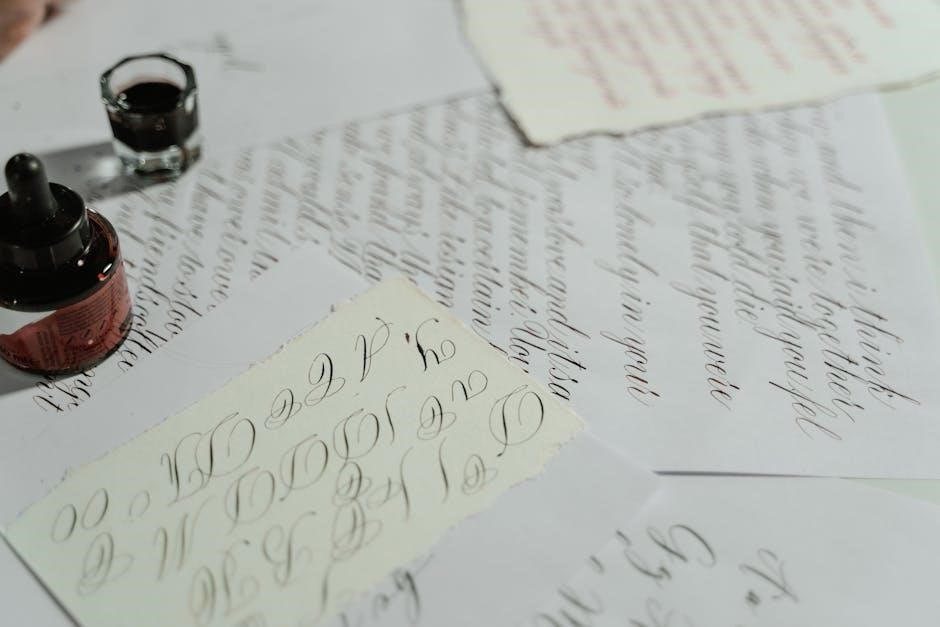
Calligraphy guide sheets are essential tools for mastering lettering, providing templates for consistent spacing, alignment, and style. They help beginners and professionals alike achieve precise strokes and uniformity. Use with ink, nibs, and paper for best results.

History and Evolution of Calligraphy Guide Sheets

Calligraphy guide sheets have a rich history, tracing back to ancient civilizations where lettering was a revered art form. Early examples were hand-drawn on parchment or vellum, serving as templates for scribes to maintain consistency in scripts like Latin, Greek, and Chinese calligraphy.

During the Middle Ages, monks used guide sheets to replicate religious texts, ensuring uniformity in illuminated manuscripts. The Renaissance brought advancements in printing, allowing mass production of guide sheets, which became indispensable for calligraphy enthusiasts.

The Industrial Revolution further popularized guide sheets through mechanized printing, making them accessible to hobbyists and professionals alike. Today, guide sheets are used globally, adapted for various languages and styles, from traditional copperplate to modern brush scripts.

Digital tools now complement physical guide sheets, offering customizable templates and practice aids. Despite technological advancements, the timeless appeal of guide sheets endures, preserving the art of calligraphy for future generations.

Types of Calligraphy Guide Sheets

Calligraphy guide sheets vary widely, catering to different scripts and styles. Common types include copperplate, brush, and gothic guides, each offering unique line spacing and lettering templates. They also come in various sizes and grid layouts.

Guide Sheets for Different Languages and Scripts

Calligraphy guide sheets are tailored to accommodate various languages and scripts, ensuring proper letter formation and spacing. For instance, Arabic calligraphy guide sheets feature intricate floral patterns and geometric designs, while Chinese and Japanese guides emphasize brush stroke precision. Latin script guides often focus on serif and sans-serif styles, catering to both modern and traditional calligraphy. Additionally, guide sheets for languages like Devanagari (Hindi) or Cyrillic incorporate specific lettering rules unique to those alphabets. These sheets are adaptable to different writing systems, making them versatile tools for calligraphers worldwide. They also support historical scripts, such as Gothic or Uncial, allowing artists to explore diverse cultural influences. By providing standardized templates, guide sheets help maintain consistency and accuracy, whether for decorative art, formal invitations, or educational purposes. This adaptability ensures that calligraphy guide sheets remain indispensable for practitioners across languages and styles.

Guide Sheets for Various Calligraphy Styles

Calligraphy guide sheets are designed to cater to a wide range of styles, from traditional to modern. For Copperplate and Spencerian scripts, guide sheets often feature fine lines to help achieve the delicate flourishes and precise letterforms characteristic of these styles. Brush Script and Modern Calligraphy guides include spacing and slant markers to ensure fluid, contemporary lettering. Additionally, styles like Gothic or Blackletter benefit from guide sheets with bold, dark lines to emphasize the dramatic contrast of thick and thin strokes. Each style-specific guide sheet is tailored to the unique requirements of the script, such as letter proportions, spacing, and decorative elements. This customization allows calligraphers to maintain consistency and precision, whether they are creating formal invitations, artistic pieces, or practicing basic lettering. By providing a structured framework, guide sheets empower artists to master various calligraphy styles with confidence and accuracy.

Materials Needed for Using Calligraphy Guide Sheets

To get started with calligraphy guide sheets, you’ll need a few essential materials. First, high-quality guide sheets are a must, as they provide the templates and spacing guides for your lettering. Choose paper that is smooth and suitable for ink, such as hot-pressed watercolor paper or vellum. Calligraphy ink, like Higgins or McCaffery’s, is ideal for bold, vibrant lines. A dip pen or a fountain pen with interchangeable nibs is also necessary, as different nibs create varying line widths and styles. Additional tools include a light box or a sunny window for tracing, a pencil for sketching, and an eraser for corrections. A ruler or straightedge can help align your work, and a practice pad is useful for warming up. Optional items like gouache or metallic inks can add creativity to your designs. Gather these materials to ensure a smooth and enjoyable calligraphy practice with guide sheets.

Step-by-Step Guide to Using Calligraphy Guide Sheets

Using calligraphy guide sheets is a straightforward process that helps you achieve professional-looking lettering. Start by placing the guide sheet on a flat surface and positioning your paper over it. Secure both with clips or tape to prevent shifting. Next, select your pen or nib, ensuring it’s properly inked. Begin by tracing the guidelines lightly with a pencil to mark the spacing and alignment. Then, carefully draw over the pencil marks with your pen, following the strokes indicated on the guide sheet. Pay attention to letter spacing and height consistency. Once complete, allow the ink to dry before handling the paper. For more intricate designs, layer additional guide sheets or use different nibs for varying line widths. Practice regularly to build muscle memory and improve accuracy. By following these steps, you can master calligraphy with ease using guide sheets.

Benefits of Using Calligraphy Guide Sheets

Calligraphy guide sheets offer numerous benefits for both beginners and experienced calligraphers. They provide a structured template, ensuring consistency in letter spacing, alignment, and height, which is crucial for creating professional-looking results. For newcomers, guide sheets simplify the learning process by breaking down complex letterforms into traceable outlines, helping to build confidence and skill. They also save time by eliminating the need to measure and mark spacing manually. Additionally, guide sheets are versatile, accommodating various scripts and styles, from modern brush lettering to traditional copperplate. They are particularly useful for practicing different languages and alphabets, as they often include specific guidelines for unique character sets. Moreover, guide sheets allow for experimentation with different tools and inks without the risk of ruining expensive paper. Overall, they are an invaluable resource for mastering calligraphy, fostering creativity, and achieving precise, elegant lettering with ease.

Customizing Your Calligraphy Guide Sheets

Customizing calligraphy guide sheets allows you to tailor them to your specific needs, enhancing your practice and creativity. You can adjust spacing, line height, and baseline alignment to suit your preferred script or style. For instance, adding grid patterns or flourishes can help achieve intricate designs. Many artists incorporate guidelines for different languages or alphabets, ensuring accuracy in diverse scripts. Digital tools enable you to create personalized templates, while printed sheets can be modified with overlays or tracing paper. Customization also lets you focus on problem areas, such as letter spacing or slant consistency. By adapting guide sheets to your projects, you can refine your technique, explore new styles, and maintain precision. This flexibility makes guide sheets invaluable for both learning and mastering calligraphy, ensuring your work remains unique and polished.

Common Mistakes to Avoid When Using Guide Sheets

When working with calligraphy guide sheets, several common mistakes can hinder progress. One of the most frequent errors is ignoring proper alignment, leading to uneven letters. Ensure your guide sheet is straight and securely fastened. Another mistake is using the wrong nib size for the template, causing strokes to appear disproportionate. Additionally, neglecting to practice basic strokes before moving to complex scripts can result in inconsistent lettering. Many beginners also overlook the importance of maintaining consistent pressure and angle with their nib, which is crucial for uniform lines. Furthermore, failing to leave adequate space between letters and words can make text appear cramped. It’s also easy to rush through practice, so take your time to focus on precision. Finally, not warming up with simple exercises before diving into intricate designs can lead to stiffness in your strokes. By being mindful of these pitfalls, you can maximize the effectiveness of your guide sheets and improve your calligraphy skills more efficiently.

Advanced Techniques for Mastering Calligraphy with Guide Sheets

Mastering calligraphy with guide sheets involves refining your skills through advanced techniques. One such method is layering, where you build up strokes gradually to achieve depth and texture. Experimenting with different nib sizes and ink flows can also enhance your work. For instance, using a flexible nib allows for varying line widths, adding dynamism to your letters. Another advanced technique is incorporating flourishes and decorative elements, which require precision and control. Practicing these embellishments with guide sheets helps maintain consistency. Additionally, blending different scripts or styles within a single piece can create unique and visually striking designs. To take your calligraphy to the next level, focus on perfecting spacing and alignment, as these are critical for professional-looking results. Regular practice with guide sheets will help you develop muscle memory and improve your overall craftsmanship. By pushing the boundaries of traditional techniques, you can unlock new creative possibilities in calligraphy.

The Role of Guide Sheets in Modern Calligraphy

In modern calligraphy, guide sheets remain indispensable for maintaining precision and consistency. They serve as a foundation for both beginners and professionals, ensuring uniform lettering and spacing. With the rise of digital tools, guide sheets have evolved to include customizable templates, catering to various styles and scripts. Many artists use them to experiment with new techniques while preserving traditional methods. Guide sheets also play a crucial role in workshops and classes, helping students master intricate letterforms. Their versatility allows adaptation to different surfaces and materials, making them a timeless resource in the digital age. By providing a structured framework, guide sheets empower calligraphers to focus on creativity and expression, ensuring their work remains refined and professional. Whether for personal projects or commercial designs, guide sheets continue to be a cornerstone of modern calligraphy practice.

How to Create Your Own Calligraphy Guide Sheets

Creating custom calligraphy guide sheets allows for personalized practice tailored to your needs. Start by deciding on the size and layout, considering standard dimensions for versatility. Use a ruler or digital tools to draw straight lines, ensuring precision. Include dashed lines for spacing and solid lines for writing, along with margin guidelines for alignment. Choose appropriate paper, such as regular for practice or cardstock for durability, and consider laminating for protection against ink. Customize templates for different calligraphy styles, like copperplate or brush script. Utilize online templates as a starting point and adjust them to suit your preferences. Ensure clear, high-contrast lines for visibility. Add features like rulers or sample text for reference. For reusability, use a light pad to trace lines without marking the guide. Organize your sheets in a folder or binder for easy access. With careful planning, you can craft guide sheets that enhance your calligraphy practice and skill development.

Tips for Practicing Consistently with Guide Sheets

Consistent practice with calligraphy guide sheets is key to improving your skills. Start by setting aside a specific time each day, even if brief, to practice. Begin with warm-up exercises, such as tracing lines and basic strokes, to build muscle memory. Use a variety of tools, like nibs and brushes, to explore different effects. Focus on one style or script at a time to master it before moving on. Incorporate guide sheets into your routine to maintain uniformity in spacing and alignment. Gradually increase the difficulty of your practice as you progress. Keep a journal to track your improvement and identify areas for refinement. Stay relaxed and patient, as calligraphy is a meditative process. Experiment with different inks and papers to enhance your experience. Finally, make practice enjoyable by incorporating personal projects, like creating art or writing quotes. Regular dedication will lead to noticeable growth in your calligraphy abilities.

The Importance of Alignment and Spacing in Guide Sheets

Alignment and spacing are fundamental aspects of calligraphy, and guide sheets play a crucial role in achieving these elements. Proper alignment ensures that letters and words are evenly distributed, creating a visually appealing and professional appearance. Spacing, both between letters and lines, is equally important for readability and aesthetic balance. Guide sheets provide pre-drawn grids and baselines, helping practitioners maintain consistency in their work. Without proper alignment, text can appear disorganized and amateurish, while incorrect spacing can make it difficult to read. By using guide sheets, calligraphers can focus on the artistic aspects of lettering while ensuring structural integrity. This is especially important for beginners, as it helps build good habits and a strong foundation. Over time, consistent practice with guide sheets enhances the ability to judge alignment and spacing intuitively, leading to more confident and precise work. Thus, alignment and spacing are not just technical details but essential components of mastering calligraphy.

Using Guide Sheets for Different Surfaces and Papers

Calligraphy guide sheets are versatile tools that can be used on various surfaces and papers, but the choice of material significantly impacts the outcome. Smooth, high-quality papers, such as Bristol board or hot-pressed watercolor paper, are ideal for calligraphy as they allow ink to flow evenly and prevent feathering. Guide sheets can be placed underneath these papers to ensure alignment and spacing consistency. For textured or rough surfaces, such as cold-pressed watercolor paper, the guide sheets still provide a helpful framework, though the ink may spread slightly more. Additionally, guide sheets can be used on alternative surfaces like parchment or vellum for unique, traditional effects. When working with different papers, it’s important to adjust nibs and ink flow accordingly to maintain precision. Experimenting with various surfaces and papers while using guide sheets can enhance creativity and mastery in calligraphy. Proper surface preparation and paper selection are key to achieving professional-looking results.

The Future of Calligraphy Guide Sheets in the Digital Age

Calligraphy guide sheets are evolving in the digital age, blending traditional techniques with modern technology. Digital tools now offer customizable guide sheets, allowing artists to create personalized templates for various scripts and styles. Apps and software enable precise adjustments, making it easier to achieve consistency. Additionally, digital guide sheets can be projected onto surfaces, simplifying alignment on large or complex projects. While traditional physical sheets remain popular, digital versions provide unparalleled flexibility and convenience. This fusion of old and new ensures that calligraphy guide sheets remain relevant and accessible to future generations of artists. The rise of digital platforms also fosters collaboration, with shared templates and tutorials spreading globally. As technology advances, the possibilities for calligraphy guide sheets continue to expand, offering innovative ways to practice and master this timeless art form.

Conclusion and Final Thoughts on Calligraphy Guide Sheets

Calligraphy guide sheets remain indispensable tools for mastering the art of lettering, offering precision, consistency, and creativity. Whether for traditional scripts or modern styles, they provide a foundation for achieving beautiful results. Their versatility across languages, surfaces, and techniques ensures their relevance in both analog and digital environments. While technology advances, the timeless appeal of guide sheets endures, making them a valuable resource for artists of all levels. By combining practice, patience, and the right materials, calligraphers can unlock their full potential with these essential aids. As calligraphy evolves, guide sheets will continue to play a central role, bridging tradition and innovation. They are not just tools but gateways to artistic expression and mastery.