
What is Instructional Conversation in SIOP?
Instructional Conversation, central to the SIOP Model, focuses on engaging students in meaningful discussions to enhance both language and content comprehension.
Developed by Echevarria, Vogt, and Short, SIOP utilizes this technique to make learning accessible for English Language Learners through structured interaction.
The Sheltered Instruction Observation Protocol (SIOP) represents a robust framework designed to bolster the academic achievement of English Language Learners (ELLs). At its core, SIOP emphasizes making content comprehensible while simultaneously promoting language development. Instructional Conversation emerges as a pivotal component within this model, serving as a dynamic pedagogical approach.
Developed by Jana Echevarria, Mary Ellen Vogt, and Deborah J. Short, SIOP provides educators with a structured methodology. Instructional Conversation isn’t merely discussion; it’s a carefully facilitated exchange where teachers guide students to explore concepts deeply, utilizing language in a meaningful context. This approach fosters both linguistic growth and a stronger grasp of subject matter, creating an inclusive learning environment.
The Core Principles of SIOP
SIOP’s foundational principles center on building bridges between students’ existing knowledge and new academic content. A key tenet is comprehensibility – ensuring ELLs can understand the material presented. This is where Instructional Conversation becomes invaluable, as it allows teachers to gauge understanding through dialogue and provide targeted support.
Furthermore, SIOP prioritizes interaction, encouraging collaborative learning and active participation. Instructional Conversation directly supports this by creating opportunities for students to practice language skills in a safe and supportive setting. The model also stresses application, prompting students to connect learning to real-world scenarios, which is naturally facilitated through thoughtful discussions.
Defining Instructional Conversation
Instructional Conversation isn’t simply casual talk; it’s a carefully orchestrated dialogue designed to deepen content understanding and language development. It moves beyond rote memorization, prompting students to elaborate, clarify, and justify their thinking. This approach, integral to the SIOP Model, emphasizes teacher facilitation rather than direct lecturing.
Effective Instructional Conversation involves open-ended questions, encouraging students to actively construct meaning. It’s a dynamic process where the teacher adjusts questioning and support based on student responses. Ultimately, it aims to create a collaborative learning environment where students learn through conversation, solidifying both language proficiency and subject matter expertise.

The Eight Components of the SIOP Model
SIOP’s eight interconnected components – preparation, building background, comprehensible input, strategies, interaction, practice, delivery, and assessment – work together to support effective sheltered instruction.
Lesson Preparation: Laying the Foundation
Careful lesson preparation is the cornerstone of the SIOP Model, ensuring accessibility for all learners, particularly English Language Learners. This initial stage involves clear lesson objectives, both language and content-based, communicated effectively to students.
Teachers meticulously select appropriate content aligned with state standards and student backgrounds, anticipating potential linguistic challenges. Grouping strategies are thoughtfully considered to foster collaboration and support.
Key vocabulary is identified and pre-taught, and supplementary materials are gathered to enhance comprehension. A well-prepared lesson sets the stage for successful instructional conversations and deeper understanding.
Building Background: Connecting to Prior Knowledge
Building background knowledge is a crucial component of the SIOP Model, directly impacting the effectiveness of instructional conversations. This involves explicitly linking new concepts to students’ existing experiences and cultural contexts.
Teachers employ strategies like brainstorming, pre-teaching vocabulary with visuals, and utilizing graphic organizers to activate prior knowledge. Relatable examples and analogies bridge the gap between the familiar and the unfamiliar.
By establishing a strong foundation, educators empower ELLs to participate confidently in discussions, fostering deeper comprehension and meaningful language development during interactive learning.
Comprehensible Input: Making Content Understandable
Comprehensible input, a cornerstone of the SIOP Model, is vital for successful instructional conversations, especially with English Language Learners. This principle emphasizes presenting content in a way that students can understand, even if they don’t know every word.
Strategies include using simplified language, providing visual aids, demonstrating concepts, and slowing speech. Teachers modify their delivery to ensure clarity, supporting students’ ability to actively participate in discussions.
When input is comprehensible, students are more likely to engage, ask questions, and contribute meaningfully to the conversation, enhancing both language and content acquisition.
Strategies: Supporting Learning Processes
Within the SIOP Model, employing effective strategies is crucial for maximizing the benefits of instructional conversation. These strategies actively support students’ learning processes, particularly for English Language Learners.
Techniques include providing scaffolding, graphic organizers, and opportunities for peer interaction. Teachers strategically select methods that promote active participation and deeper understanding of the content.
These strategies help bridge the gap between students’ current knowledge and the new material, fostering a supportive environment where they can confidently engage in meaningful discussions and build both language and content skills.
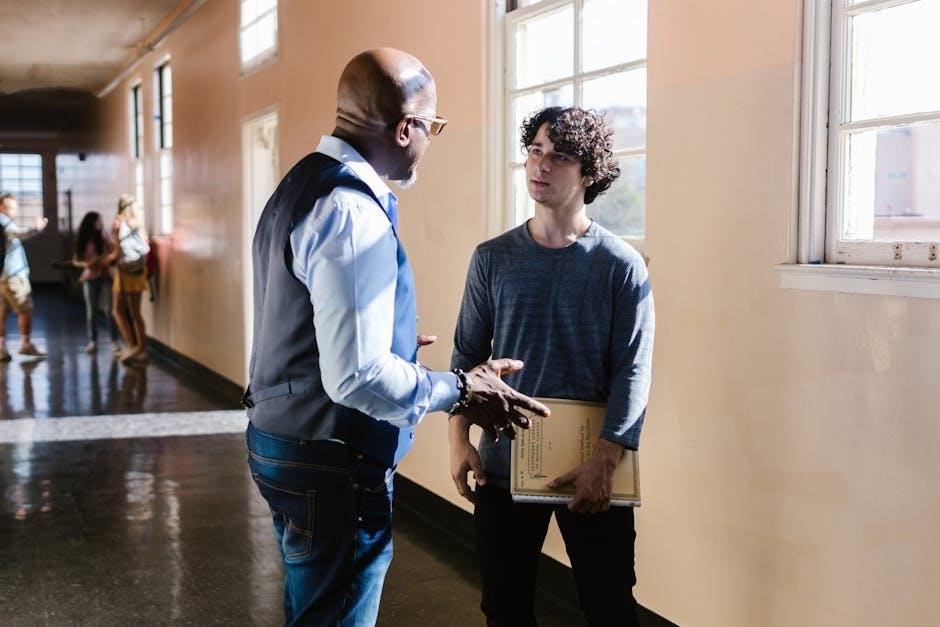
Interaction: The Heart of Instructional Conversation
Interaction is a core component of the SIOP Model, fostering robust discussions where students actively negotiate meaning and build comprehension collaboratively.
Effective interaction, guided by teachers, is vital for language development and content mastery.
Features of Effective Instructional Conversation
Effective Instructional Conversation, within the SIOP Model, exhibits several key characteristics. It’s characterized by a focus on meaning, not just grammatical correctness, encouraging students to take risks with language.
Teachers facilitate, rather than dominate, discussions, prompting students with open-ended questions. These conversations build on students’ existing knowledge, connecting new information to their experiences.
Turn-taking is equitable, ensuring all students have opportunities to participate. Furthermore, conversations are often extended, allowing for deeper exploration of concepts and clarification of understanding. The goal is collaborative knowledge construction, where students learn from and with each other.
Teacher’s Role in Facilitating Interaction
Within the SIOP Model, the teacher’s role in Instructional Conversation is pivotal, shifting from lecturer to facilitator. They carefully plan open-ended questions that stimulate discussion and encourage students to elaborate on their thinking.
Teachers provide scaffolding, offering support like sentence starters or clarifying vocabulary, but gradually releasing responsibility to students. They actively listen, paraphrasing and restating student contributions to ensure understanding.
Crucially, teachers create a safe and supportive classroom climate where students feel comfortable taking risks. They monitor participation, ensuring equitable turn-taking and prompting quieter students to contribute, fostering a collaborative learning environment.
Student’s Role in Instructional Conversation
In Instructional Conversation, as part of the SIOP Model, students are active participants, not passive recipients of information. They are expected to contribute their existing knowledge and experiences to the discussion, building upon prior learning.
Students actively listen to their peers, responding to and building upon each other’s ideas. They are encouraged to ask clarifying questions, seek further explanation, and challenge assumptions respectfully.
A key role involves using academic language to express their thoughts and justify their reasoning, with support from the teacher as needed. Students collaboratively construct meaning, deepening their understanding of both content and language.
Types of Questions Used in Instructional Conversation
Effective Instructional Conversation, a cornerstone of the SIOP Model, utilizes a variety of question types to stimulate deeper thinking and language development. Open-ended questions are crucial, prompting students to elaborate and explain their reasoning beyond simple yes/no responses.
Clarification questions ensure comprehension, while probing questions encourage students to expand on their initial ideas. Wait time is essential, allowing students to formulate thoughtful responses.
Higher-order thinking questions, like those requiring analysis or evaluation, challenge students to apply their knowledge. Teachers strategically use these questions to scaffold learning and promote meaningful interaction.

Practice and Application: Deepening Understanding
Practice and Application within the SIOP Model solidify learning through hands-on activities, allowing students to apply new knowledge in relevant, real-world contexts.
Hands-on Activities and Practice
Hands-on activities are a cornerstone of the SIOP Model, providing English Language Learners with opportunities to actively practice new concepts. These activities move beyond rote memorization, fostering deeper understanding through engagement and manipulation of materials.
Effective practice incorporates varied modalities – visual, auditory, kinesthetic – to cater to diverse learning styles. Collaborative tasks, such as paired or small-group work, encourage instructional conversation, allowing students to articulate their thinking and learn from peers.
Activities should be purposefully designed to reinforce content objectives and language goals, building confidence and fluency. This practical application is vital for long-term retention and academic success.
Application of Knowledge to Real-World Scenarios
The SIOP Model emphasizes connecting classroom learning to authentic, real-world contexts. This application solidifies understanding and demonstrates the relevance of academic content for English Language Learners.
Through instructional conversation, students analyze how concepts apply to their lives, communities, and future aspirations. Problem-solving activities and case studies encourage critical thinking and the practical use of newly acquired knowledge.
This approach moves beyond abstract learning, fostering deeper engagement and motivation. By bridging the gap between theory and practice, students develop a more comprehensive and lasting grasp of the material, enhancing both language proficiency and content mastery.

Lesson Delivery: Engaging and Dynamic Instruction
SIOP’s lesson delivery utilizes instructional conversation to create a dynamic learning environment, ensuring content is accessible and promotes active student participation.
Pacing and Momentum in Lesson Delivery
Effective lesson delivery, within the SIOP Model, requires careful attention to pacing and maintaining momentum, especially when incorporating instructional conversation. Teachers must strategically balance direct instruction with opportunities for student dialogue.
A well-paced lesson allows sufficient time for students to process information and participate in meaningful discussions. Avoiding rushing ensures all learners, particularly English Language Learners, can contribute. Momentum is sustained by seamlessly transitioning between activities and skillfully facilitating student interactions, keeping students actively engaged in the learning process. This dynamic approach maximizes comprehension and participation.
Use of Visual Aids and Manipulatives
Visual aids and manipulatives are crucial components of SIOP lessons, significantly supporting instructional conversation and comprehension, particularly for English Language Learners. These tools make abstract concepts more concrete and accessible, fostering deeper understanding.
Images, graphic organizers, realia, and hands-on materials provide a shared visual context, enabling students to participate more confidently in discussions. They reduce linguistic demands and encourage students to express themselves, even with limited language proficiency. Integrating these resources enhances engagement and facilitates meaningful interaction during instructional conversations.

Review and Assessment: Monitoring Progress
Formative assessment within the SIOP Model continuously monitors student understanding during instructional conversations, guiding instruction and ensuring language development.
Regular checks for comprehension inform adjustments, maximizing learning for all students.
Formative Assessment Techniques
Formative assessment is crucial during instructional conversations within the SIOP Model. Observing student participation – noting who contributes, the quality of responses, and language use – provides valuable insights.
Think-Pair-Share allows all students to formulate ideas before sharing, boosting confidence and participation. Quick checks like thumbs up/down or exit tickets gauge understanding efficiently.
Questioning techniques, integral to instructional conversation, should elicit more than just recall; probe for deeper understanding and application. Analyzing student responses in real-time informs immediate adjustments to instruction, ensuring comprehension and language growth.
These techniques support a dynamic learning environment.
Summative Assessment and Evaluation
Summative assessments, while distinct from the ongoing formative assessments within instructional conversations and the SIOP Model, should reflect the integrated language and content learning.
Traditional methods like tests and projects can be adapted to allow students to demonstrate understanding using varied modalities – oral presentations, written reports, or visual displays.
Evaluation should consider both content mastery and language proficiency. Rubrics should clearly articulate expectations for both areas, providing students with transparent criteria for success.
Analyzing assessment data informs future instructional planning, refining the implementation of instructional conversation strategies.

Benefits of Instructional Conversation within SIOP
Instructional Conversation, a key SIOP component, boosts language skills, deepens content understanding, and fosters student engagement within a supportive classroom setting.
Improved Language Development
Instructional Conversation, deeply embedded within the SIOP Model, significantly contributes to English Language Learners’ language growth. Through purposeful discussions, students actively practice speaking and listening skills in a contextually relevant manner.
This focused interaction provides ample opportunities to expand vocabulary, refine grammatical structures, and improve pronunciation. The collaborative nature of instructional conversations encourages students to negotiate meaning, ask clarifying questions, and articulate their thoughts – all vital components of language acquisition.
Furthermore, the supportive classroom environment fostered by SIOP allows learners to take risks and experiment with language without fear of judgment, accelerating their overall language proficiency.
Enhanced Content Understanding
The SIOP Model’s emphasis on Instructional Conversation isn’t solely about language; it’s a powerful tool for deepening content comprehension. By discussing subject matter, students move beyond rote memorization and engage in higher-order thinking skills like analysis, evaluation, and synthesis.
Articulating their understanding to peers and the teacher forces students to clarify their thoughts and identify any gaps in their knowledge. This collaborative process allows for peer teaching and mutual support, solidifying concepts for everyone involved.
Instructional Conversation transforms learning from a passive reception of information to an active construction of meaning, leading to more robust and lasting content understanding.
Increased Student Engagement
Instructional Conversation, a cornerstone of the SIOP Model, dramatically boosts student engagement. Traditional lecture-based instruction often leaves English Language Learners feeling passive and disconnected. However, SIOP’s focus on interactive dialogue creates a more dynamic and stimulating learning environment.
When students are actively participating in discussions, sharing their ideas, and responding to their peers, they become invested in the learning process. This increased engagement fosters a sense of ownership and responsibility for their own learning.
The collaborative nature of Instructional Conversation also reduces anxiety and encourages participation from all students, even those who are typically hesitant to speak up.
Cultivating a Supportive Classroom Environment
The SIOP Model, through Instructional Conversation, actively cultivates a supportive and inclusive classroom environment. By prioritizing student interaction and collaborative learning, it shifts the focus from teacher-centered instruction to a community of learners.
This approach fosters a sense of belonging and encourages students to take risks, knowing their contributions are valued. The emphasis on comprehensible input and scaffolding ensures that all learners, particularly English Language Learners, feel confident and supported.
A supportive environment minimizes anxiety and promotes positive relationships between students and the teacher, leading to increased participation and academic success.

Implementing Instructional Conversation: Practical Tips
Plan lessons with open-ended questions, scaffold responses, and differentiate for diverse learners to effectively integrate Instructional Conversation within the SIOP Model.
Planning for Instructional Conversation
Careful planning is crucial for successful Instructional Conversation within the SIOP Model. Begin by identifying key content concepts and formulating open-ended questions that encourage students to elaborate and explain their thinking.
Anticipate potential student responses and prepare scaffolding strategies to support their language development. Consider pre-teaching vocabulary and providing sentence frames to aid participation.
Structure activities to promote collaborative dialogue, ensuring all learners have opportunities to contribute. Align questions with learning objectives and create a supportive classroom climate where students feel comfortable taking risks and expressing their ideas.
Remember to consider diverse learning needs during the planning process.
Scaffolding Student Responses
Effective scaffolding is vital in Instructional Conversation, particularly for English Language Learners. Teachers should provide temporary support structures to help students articulate their thoughts and participate fully.
This includes offering sentence starters, rephrasing questions, and providing visual cues. Encourage peer support by prompting students to clarify each other’s ideas.
Expand on student responses by adding more detail or complexity, modeling appropriate language use. Gradually reduce scaffolding as students gain confidence and proficiency.
The goal is to foster independence and empower learners to engage in meaningful academic discourse within the SIOP framework.
Differentiation for Diverse Learners
Instructional Conversation thrives on adapting to the varied needs of learners within the SIOP Model. Differentiation ensures all students can participate meaningfully, regardless of their language proficiency or background knowledge.
Modify questioning techniques – offer simpler prompts for beginners and challenge advanced learners with open-ended inquiries. Provide varied response options, like drawing, acting, or using sentence frames.
Group students strategically, pairing proficient speakers with those needing support. Utilize pre-teaching of vocabulary and concepts to build background knowledge.
Remember, the SIOP approach prioritizes inclusivity and equitable access to learning.

The Developers of the SIOP Model
Jana Echevarria, Mary Ellen Vogt, and Deborah J. Short collaboratively developed the SIOP Model, emphasizing comprehensible instruction and effective Instructional Conversation strategies.
Jana Echevarria’s Contributions
Jana Echevarria is a pivotal figure in the development and dissemination of the SIOP Model, deeply committed to supporting English Language Learners’ academic success. Her extensive research and practical experience significantly shaped the framework, particularly regarding Instructional Conversation.
Echevarria’s work emphasizes creating a classroom environment where language is both accessible and academically challenging. She champions strategies that promote student interaction and collaborative learning, making content comprehensible through meaningful dialogue. Her contributions extend to teacher training and professional development, empowering educators to effectively implement SIOP principles and foster robust Instructional Conversations.
Through publications and workshops, Echevarria continues to advocate for evidence-based practices that benefit all students, especially those learning English.
Mary Ellen Vogt’s Contributions
Mary Ellen Vogt, alongside Jana Echevarria and Deborah Short, was instrumental in creating the SIOP Model, with a particular focus on the practical application of sheltered instruction techniques. Her expertise significantly influenced the integration of Instructional Conversation as a core component.
Vogt’s research highlights the importance of building background knowledge and making content comprehensible for English Language Learners. She emphasizes the role of collaborative learning and teacher facilitation in fostering meaningful interactions. Her work stresses the need for structured conversations that allow students to actively participate and demonstrate their understanding.
Vogt’s contributions ensure the SIOP Model remains a practical and effective tool for educators.
Deborah J. Short’s Contributions
Deborah J. Short, a key developer of the SIOP Model, brought extensive expertise in language acquisition and literacy to the project. Her work deeply informs the implementation of Instructional Conversation within the framework, emphasizing its role in developing both language proficiency and content knowledge.
Short’s research focuses on creating supportive classroom environments where ELLs can thrive. She advocates for strategic questioning techniques and scaffolding to facilitate student participation in discussions. Her contributions highlight the importance of providing opportunities for students to practice using language in authentic contexts.
Short’s insights ensure the SIOP Model effectively supports diverse learners.

SIOP Conference and Career Services
SIOP’s annual conference offers professional development, including insights into Instructional Conversation. Career services are also available to attendees seeking advancement.
Preparing for the SIOP Annual Conference
Attending the SIOP Annual Conference provides a valuable opportunity to deepen your understanding of Instructional Conversation and the broader SIOP Model. Prior research into conference sessions focusing on sheltered instruction strategies is highly recommended.
Familiarize yourself with the core principles of SIOP, particularly how Instructional Conversation facilitates comprehensible input and meaningful interaction for English Language Learners. Consider reviewing resources developed by Jana Echevarria, Mary Ellen Vogt, and Deborah J. Short, the model’s creators.
Networking with colleagues and exploring career services offered during the conference can further enhance your professional growth in this area.
Volunteering Opportunities at SIOP
Volunteering at the SIOP Annual Conference offers a unique immersive experience, allowing you to witness firsthand the practical application of Instructional Conversation. Supporting conference activities provides valuable insights into how the SIOP Model, developed by Echevarria, Vogt, and Short, is implemented.
You’ll observe educators utilizing techniques to make content comprehensible for English Language Learners, with Instructional Conversation being a key component. This hands-on involvement deepens understanding of effective strategies for building background knowledge and fostering student interaction.
It’s a fantastic way to network and contribute to the SIOP community!
Career Services Offered by SIOP
While SIOP primarily focuses on professional development in sheltered instruction, understanding Instructional Conversation – a core component of the SIOP Model – enhances educators’ marketability. Developed by Jana Echevarria, Mary Ellen Vogt, and Deborah J. Short, SIOP training demonstrates a commitment to effective teaching practices.
Highlighting your knowledge of Instructional Conversation during job applications showcases your ability to create engaging, comprehensible lessons for English Language Learners. This skill is highly valued in diverse educational settings.
SIOP’s career resources indirectly support this by fostering professional growth!